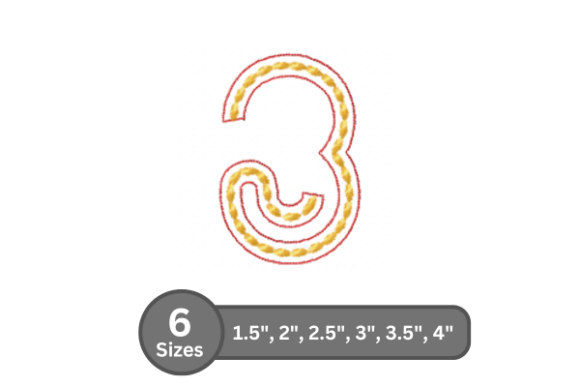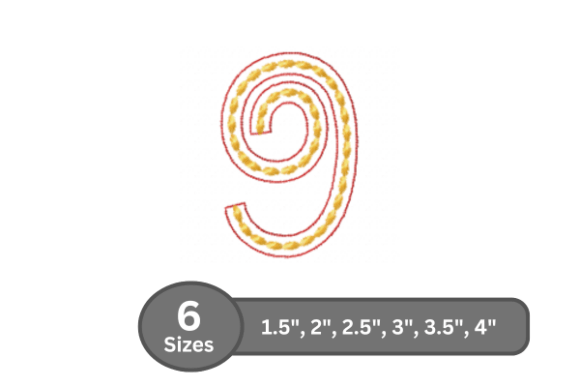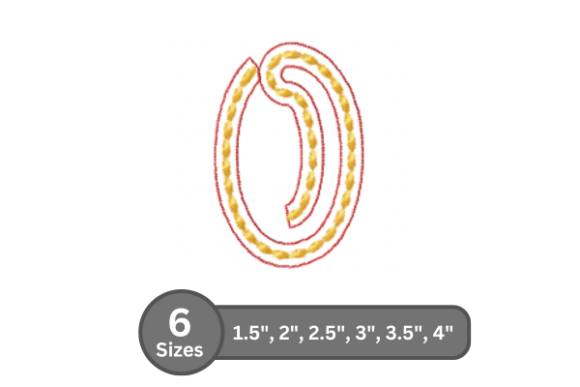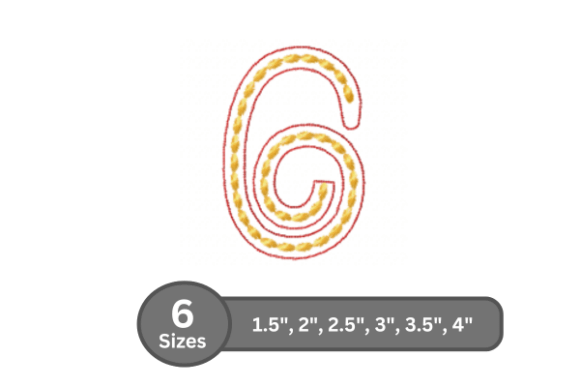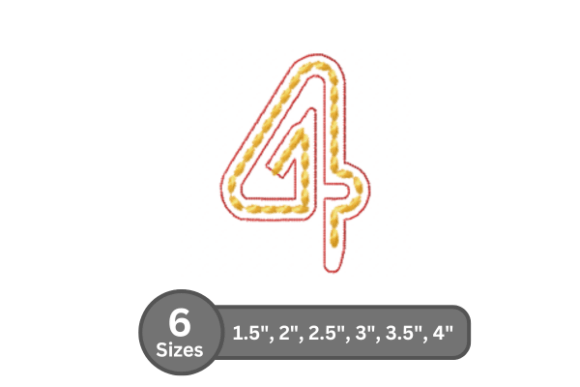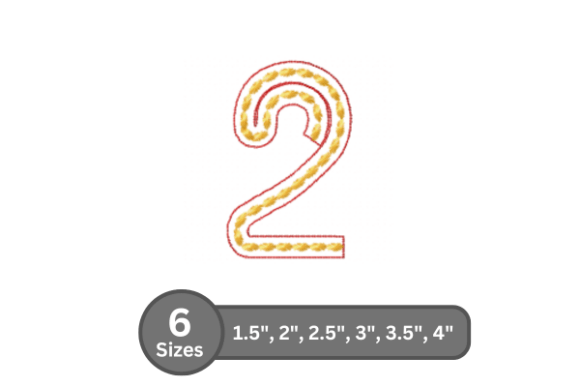
Rope Twist Number -2: A Craft Fair-Ready Monogram Font
First Impression: Rustic Charm Meets Clean Modernity
As an embroidery designer who’s stitched over 300 craft fair booths—from snowy Vermont markets to sun-drenched California pop-ups—I instantly recognized Rope Twist Number -2’s quiet confidence. It’s not loud or flashy, but it carries weight: a soft rope-twist motif wrapped around each numeral gives it tactile warmth, while the fill-stitch execution keeps lines smooth and legible. This isn’t farmhouse cliché or minimalist austerity—it’s *thoughtful rustic*. Customers pause longer at booth displays featuring Rope Twist Number -2 because it feels handmade without looking handmade *by hand*. That subtle tension—machine precision with organic rhythm—is exactly what sells at craft fairs.
Where Rope Twist Number -2 Shines on Real Products
In my booth prep last month, I tested Rope Twist Number -2 across seven product types—and here’s where it truly elevated the handmade product:
- Tote bag design: Embroidered centered on the lower right corner (1.5" height), Rope Twist Number -2 added instant personality to neutral canvas. Not too small to ignore, not so large it overwhelmed the fabric texture.
- Apron embroidery: On cotton twill aprons, the twist detail read beautifully above the pocket—especially in navy thread on oatmeal fabric. It felt intentional, not decorative filler.
- Tea towel embroidery: At 1.25", Rope Twist Number -2 held crispness on terry cloth—no feathering, no skipped stitches—thanks to its balanced stitch density and generous underlay.
- Embroidered patch: As a sew-on 2" circle patch (with merrowed edge), Rope Twist Number -2 became a bestseller for gift buyers pairing it with denim jackets or tote bags.
- Fabric pouch & pillow cover: Its rhythmic flow translated seamlessly to curved seams and tight corners—no distortion, even on bias-cut linen pouches.
It performed less strongly on curved cap surfaces and ultra-thick toweling unless resized to ≥1.75". But that’s not a flaw—it’s a cue: Rope Twist Number -2 is designed for clarity, not compromise.
What Makes It Sell at Market Stalls (and on Etsy)
Rope Twist Number -2 works because it’s *instantly legible* yet *uniquely textured*. At a glance, shoppers recognize it as a number—not abstract art—so it satisfies functional needs (birth year, house number, order count). But the rope motif adds story: “This was chosen, not slapped on.” That perception lifts perceived value, especially among boutique makers pricing handmade products at $45–$85. On Etsy listings, Rope Twist Number -2 photographs cleanly—even on dark fabric—because its fill stitch avoids thin outlines that blur in natural light. And yes, it’s highly repeatable for batch production: consistent spacing, uniform stitch direction, and minimal jump stitches mean fewer thread breaks during long runs.
Careful-Use Notes Every Designer Should Know
Rope Twist Number -2 is forgiving—but not magic. Here’s where attention prevents rework:
- Dense stitch areas: The rope wrap adds slight density. On plush fabrics like fleece or heavy terry, use medium-weight cutaway stabilizer—not tear-away—to prevent puckering.
- Tiny details: Below 1", the twist loses definition. Stick to ≥1.25" for tea towels, patches, and small pouches.
- Textured towels & dark fabric: Test contrast first. Navy thread on black terry? Too muddy. Charcoal thread on charcoal terry? Invisible. Go one tone lighter or use metallic silver for lift.
- Curved cap surfaces: Avoid placing Rope Twist Number -2 across the crown seam. Center it flat on the front panel instead—or resize to ≥2" for structural integrity.
Why It Strengthens Your Booth & Brand
A craft fair table isn’t just about inventory—it’s about visual rhythm and emotional resonance. Rope Twist Number -2 creates cohesion across diverse items: same font on a linen pillow cover, a striped market bag, and a ceramic mug sleeve tells customers, “This maker has a point of view.” It signals consistency without rigidity—ideal for small shop owners building brand recognition. Buyers engage more when they see thoughtful repetition: “Oh, you used that rope number on your aprons *and* your patches—that’s your thing!” That connection turns browsers into repeat customers. And because Rope Twist Number -2 reads well in both digital embroidery file previews and printable mockups, it strengthens your Etsy seller credibility before the first click.
Practical Embroidery Designer Notes Before You Stitch
Before cutting fabric or loading hoops, do this:
- Test Rope Twist Number -2 on scrap fabric matching your final product’s weight and texture.
- Check thread contrast under the lighting you’ll use at market—natural daylight shifts dramatically indoors.
- Review letter spacing: Tight kerning helps Rope Twist Number -2 feel unified, but verify it doesn’t crowd on curved edges.
- Confirm hoop size compatibility—some versions require a 4x4" minimum; others scale cleanly down to 3x3".
- Inspect stitch density visually—not just in software. Overly dense fills can cause stiffness on lightweight cottons.
- Use the right stabilizer: Cutaway for knits and terrycloth, tear-away for stable wovens like quilting cotton.
- Create at least one real mockup—not just a digital preview—so you see how Rope Twist Number -2 drapes, stretches, and catches light.
- Compare fabric colors side-by-side: A cream thread may vanish on ecru linen but glow on oatmeal canvas.
- Confirm commercial licensing applies to your intended use—Rope Twist Number -2 is designed for commercial embroidery, but always double-check terms before selling finished products.
Rope Twist Number -2 won’t shout from across the aisle—but it will make someone stop, touch the fabric, and say, “I need this for my kitchen.” That’s the quiet power of a well-digitized monogram. For craft fair sellers, Etsy sellers, and boutique makers building meaningful handmade product lines, Rope Twist Number -2 isn’t just another embroidery file. It’s a trusted design asset—one that earns its place in your most confident, cohesive, and commercially smart offerings.